
Curri Driver
CurriBusiness
4.5895.00 Reviews
- Version
- 3.1.2
- Installs
- 500.00K
- Age Rating
- Everyone
Screenshots

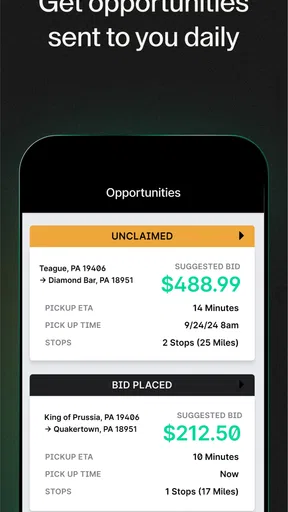
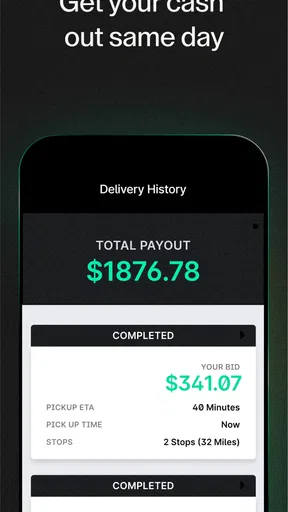
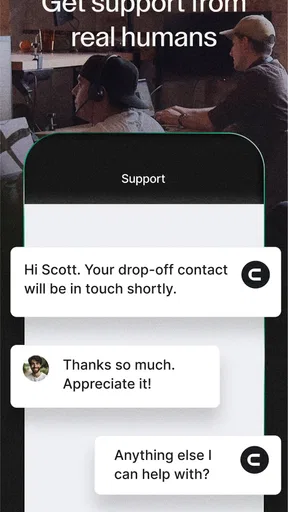
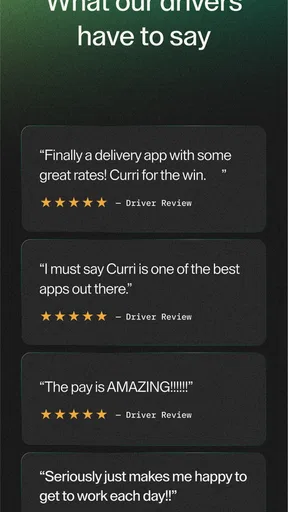
Our Review of Curri Driver
 Analysis by Appyee
Curri Driver is a business app built for drivers who want to find delivery work near their current location. I approached it less like a general delivery marketplace and more like a practical tool for checking whether nearby jobs are available when I am already on the road. That distinction matters: its usefulness depends heavily on where I am, when I check, and whether the available work fits my route and schedule.
The app comes from Curri, is free to use, and is rated for Everyone. It has been available since November 25, 2019, and the current release is version 3.1.2. With more than 500 thousand installs and an average score of 4.5 from roughly 4.6 thousand ratings, it has built a noticeable user base without feeling like an obscure experiment. My overall impression is positive, but I would not treat it as a guaranteed source of income. It is better understood as a location-focused way to look for delivery opportunities.
How Curri Driver feels when you need a nearby job
The first thing I noticed is that the app’s central idea is refreshingly direct. Instead of making me browse a broad catalog of unrelated work, it focuses attention on deliveries close to my current position. That can save time for a driver who is already moving around a service area and wants to reduce empty driving between jobs.
The best use of Curri Driver is as a route-aware opportunity checker, not as a promise of constant assignments. If I am near an active commercial area, opening the app may be worthwhile because the location-based approach gives nearby work priority. If I am far from the places where deliveries are commonly available, the experience is naturally less rewarding. The app cannot make a quiet area busy, so expectations have to match the local market.
That makes the app especially interesting for independent drivers, people with flexible schedules, and drivers who already understand the roads in their region. Someone who knows which areas generate regular business deliveries can make better decisions than a newcomer who simply opens the app anywhere and waits. In practice, local knowledge becomes part of the product experience.
Speed in everyday use
For a delivery driver, speed is not only about how quickly an app opens. It is also about how quickly I can understand whether checking it is worth my attention. Curri Driver’s focused purpose helps here. I am not trying to manage a complicated business dashboard or compare an endless list of unrelated services. I am checking for nearby delivery opportunities and deciding whether one fits my next move.
That narrow purpose can make the app feel efficient during short breaks. A quick check before leaving a parking area, after completing a delivery, or while planning the next part of a shift is more useful than a long browsing session. The real time saver comes from avoiding unnecessary repositioning. If a nearby delivery lines up with where I am already headed, it may be more attractive than a job that looks good on paper but requires a long empty drive first.
I would still avoid treating every nearby result as automatically worthwhile. Distance from my current location is only one part of the decision. I also need to think about traffic, loading time, vehicle suitability, the direction of the next trip, and whether accepting a job would leave me stranded far from the areas where I want to work. The app’s location emphasis is helpful, but it does not replace my own judgment.
What happens during heavier use
The most demanding moments are likely to come when I check repeatedly while moving between deliveries, handle several decisions in a short period, or use the app alongside navigation and communication tools. That is normal for this type of work: the phone becomes a work instrument rather than something I consult occasionally.
My practical advice is to keep the workflow simple. I would check Curri Driver while safely parked, review the opportunity, and then switch to navigation only after deciding to proceed. Constantly jumping between apps while driving creates more friction than it removes, regardless of how fast the delivery app feels. A clean routine also makes it easier to remember why I accepted a job and where it should take me next.
Heavy use can also expose a less obvious trade-off. A location-centered driver app is most useful when location context is current, but frequent location checks and extended screen use can place extra demand on a phone battery. I would begin a shift with a well-charged device and keep a reliable charging option in the vehicle. That is not a criticism unique to Curri Driver; it is simply part of using a phone as a live work companion for several hours.
Another useful habit is to decide on a personal acceptance rule before the shift starts. For example, I might prefer jobs that keep me within a familiar service area or that move me toward my next planned stop. Without a rule, the convenience of seeing a nearby opportunity can encourage short-term decisions that create a poor overall route. Curri Driver helps me discover possibilities, but I still need a strategy for choosing among them.
Reliability and recovering from interruptions
Reliability matters more here than visual polish. Missing a delivery opportunity because the app needs attention at the wrong moment can be frustrating, while losing context during an active workday can be more serious. I look for a simple recovery path: reopen the app, regain my place, and continue without having to reconstruct everything from memory.
In my experience with location-dependent tools, interruptions can come from ordinary situations such as moving through weak coverage, switching to a navigation app, receiving a call, or locking the screen. I would therefore use Curri Driver with the same caution I apply to any mobile work tool: confirm important details before leaving a stop, keep the phone accessible but secure, and avoid assuming that an opportunity will remain available indefinitely.
The app’s established presence is reassuring. Curri has maintained the product across several years, and the current version shows that it is still being developed rather than abandoned. That does not guarantee a perfect session on every phone or in every coverage area, but it gives me more confidence than I would have in a brand-new driver app with no visible history.
Recovery also depends on the driver’s habits. If I am interrupted halfway through checking a delivery, I would rather pull over and review the opportunity again than rely on a rushed glance. If the app does not immediately behave as expected, restarting the app and checking my connection are sensible first steps. I would not build a shift around accepting work at the last possible second; a small buffer makes the whole process less fragile.
Older phones and device limitations
Curri Driver supports Android devices running version 7.0 or later, which gives it a broad compatibility range. That is useful for drivers who do not want to purchase a recent phone just to try a delivery app. At the same time, operating-system compatibility does not mean that every older device will feel equally comfortable under working conditions.
A phone can meet the minimum requirement and still have limited storage, a tired battery, slower multitasking, or a screen that is difficult to read outdoors. Those details matter when Curri Driver is used beside navigation and other work tools. I would be more comfortable using it on a device that can switch between apps without hesitation and remain powered through a full shift.
Drivers with older hardware should also keep their expectations practical. If the phone struggles with several apps at once, the problem may appear as general device friction rather than a failure of Curri Driver itself. Closing unnecessary apps, keeping enough free storage, and using a dependable charging setup can make a meaningful difference. I would test the app during a quiet period before relying on it during a busy workday.
The Everyone content rating is another small advantage for accessibility. It means the app is not positioned as an age-restricted product, although the real audience is clearly people using it for delivery work. A family member may be able to install it, but the value depends on being an eligible driver with a practical reason to look for Curri deliveries.
A realistic delivery-day workflow
Imagine I have finished a morning delivery and am parked near a commercial district. Rather than immediately driving back toward home, I open Curri Driver to see whether there is a nearby opportunity that fits my vehicle, time, and preferred direction. If I find something suitable, I compare the pickup area with my planned route. The nearby location is useful because it may reduce dead mileage, but I still consider traffic and what the trip does to the rest of my day.
If nothing fits, I do not keep refreshing endlessly. I close the app, continue with my plan, and check again when I reach a different area or finish another delivery. This is one of the most important practical lessons: the app works best when it supports a moving schedule instead of becoming the schedule. Repeatedly waiting for a perfect job can waste more time than a sensible repositioning decision.
For a driver who works part time, that workflow can be especially convenient. I can use the app during the gaps in an existing day rather than committing to a rigid block of work. For a full-time driver, it may serve as one source of nearby opportunities while the driver manages fuel, breaks, route planning, and vehicle capacity separately.
I would also record the areas and times that tend to produce useful results. That personal log can be more valuable than a single successful check because it helps me recognize patterns in my own working area. Curri Driver provides the immediate search tool; my observations provide the longer-term strategy.
Where it beats the usual alternatives
Compared with a general gig-work platform, Curri Driver feels more specialized. Broad platforms may offer a wider mix of tasks, but that variety can also mean more browsing and less focus on deliveries close to my present location. Curri’s advantage is the tighter connection between the driver’s current position and the work being considered.
Compared with finding work through phone calls, group messages, or informal local contacts, the app offers a more repeatable way to check for opportunities. I do not have to depend entirely on remembering who might have work available that day. The trade-off is that a personal contact may sometimes provide context that an app cannot, such as a preferred customer, a familiar pickup routine, or a route I already know well.
Compared with a navigation app, Curri Driver serves a completely different purpose. Navigation can tell me how to reach a destination, but it does not replace a delivery-work discovery tool. I would use both, switching from opportunity checking to route guidance once I have made a decision. Trying to use navigation as a substitute for the driver app would miss the point.
The app is not the right choice for someone seeking a broad employment marketplace, long-term scheduling tools, or a general business-management suite. Its strength is narrower and more practical: helping a driver look for nearby Curri delivery work. If I need a single platform that combines many kinds of gigs, another service may suit me better. If local proximity is my main concern, Curri Driver has a clearer reason to exist.
Who should use it, and who should skip it
I would recommend trying Curri Driver if I were speaking to a driver who values flexibility, already travels within a known area, and wants to reduce unnecessary empty miles. It is also a sensible option for someone who prefers checking opportunities independently instead of waiting for a dispatcher or relying only on personal contacts.
I would be more cautious recommending it to someone who needs guaranteed daily income, lives in an area with little delivery activity, or dislikes making route and timing decisions independently. The app can help locate possibilities, but it does not remove the uncertainty that comes with location-based delivery work. A driver who wants predictable hours may find a scheduled employer or a more structured platform easier to manage.
Vehicle and phone readiness matter too. If my vehicle is not suited to the deliveries I hope to accept, nearby availability will not solve the problem. Likewise, if my phone cannot handle navigation, calls, and the driver app during a long shift, I should address that limitation before depending on the service.
My performance verdict
Curri Driver leaves me with the impression of a focused, practical business app rather than an overloaded all-purpose platform. Its perceived speed comes from keeping the main task simple: check for nearby delivery opportunities and decide whether one fits. Its biggest performance challenge is not necessarily the app itself, but the surrounding conditions of mobile work—coverage, battery life, multitasking, traffic, and the driver’s own route decisions.
The free price makes it easy to test without committing money up front, and the broad Android support is helpful for drivers using older phones. The app’s 4.5 average from thousands of ratings suggests that many users find the concept useful, while the install base of over half a million indicates meaningful adoption. I see those figures as encouraging context, not a substitute for testing availability in my own area.
My final judgment is that Curri Driver is worth trying when nearby delivery work is the priority. I would use it as one part of a disciplined workflow: check while parked, compare each opportunity with the full route, protect battery life, and avoid treating every result as automatically profitable. If you want a focused way to look for Curri deliveries near your current location, this app is a reasonable tool to keep ready on your phone. If you need guaranteed assignments or a broad collection of unrelated gigs, I would choose a more structured alternative instead.
Verdict
Strengths of Curri Driver
- Flexible delivery work with control over your available schedule.
- Clear pickup and drop-off details help organize each route.
- Useful for drivers who prefer local, on-demand delivery jobs.
- May offer opportunities to earn from unused vehicle capacity.
- Designed specifically for professional delivery and logistics drivers.
Limitations of Curri Driver
- Job availability can vary significantly by location and time of day.
- Earnings may fluctuate depending on distance, demand, and completed jobs.
- Drivers may need to handle loading, unloading, or bulky items.
- Fuel, maintenance, and vehicle expenses can reduce overall profits.
- Background checks and approval requirements may delay account activation.
Similar Picks in This Category
View All
LinkedIn: Community & Network
LinkedIn3.8

Zoom Workplace
zoom.com4.1

Microsoft Teams
Microsoft Corporation4.6

Meta Business Suite
Meta Platforms, Inc.4.6

Webex Meetings
Cisco Systems, Inc.4.5

TeamViewer Remote Control
TeamViewer4.4
Frequently Asked Questions
What is Curri Driver and who is it designed for?
Curri Driver is a delivery platform application designed for independent drivers who want to transport commercial goods, construction materials, equipment, and other items for businesses. After creating an account and completing the required verification process, drivers can view available delivery opportunities, review job details, and decide whether a particular route and payment fit their vehicle, schedule, and preferences.
What types of vehicles and deliveries are supported by Curri Driver?
The types of deliveries available through Curri Driver can vary by location and local demand. Jobs may involve transporting tools, building supplies, parts, packages, or oversized commercial items. Drivers generally need a suitable vehicle, such as a car, van, pickup truck, or larger vehicle, depending on the assignment. Before accepting a job, carefully check the dimensions, weight, pickup requirements, and delivery instructions.
What are the requirements to become a Curri Driver?
Applicants typically need to meet eligibility requirements related to age, identity verification, driving history, insurance, and vehicle ownership or access. The exact requirements may differ depending on the market and the type of vehicle used. You may also need to submit documents and pass background or safety checks. It is best to review the current requirements in the app before applying, since approval is not guaranteed.
How do payments and delivery earnings work in Curri Driver?
Curri Driver displays payment information for available delivery jobs, allowing drivers to assess the expected earnings before accepting an assignment. Actual income can depend on the number of jobs in your area, distance, vehicle type, timing, and demand. Payment schedules, processing times, and any applicable adjustments or fees should be confirmed inside the app, as they may vary by region and account status.
Is Curri Driver worth downloading for someone looking for flexible work?
Curri Driver may be useful for drivers who prefer flexible, delivery-based work and have a vehicle suited to commercial transportation. However, it is not a guaranteed source of steady income. Job availability can change significantly by city, and some deliveries may require lifting, careful handling, or additional equipment. Before downloading, consider fuel costs, vehicle maintenance, insurance, taxes, and the physical demands of the assignments.
